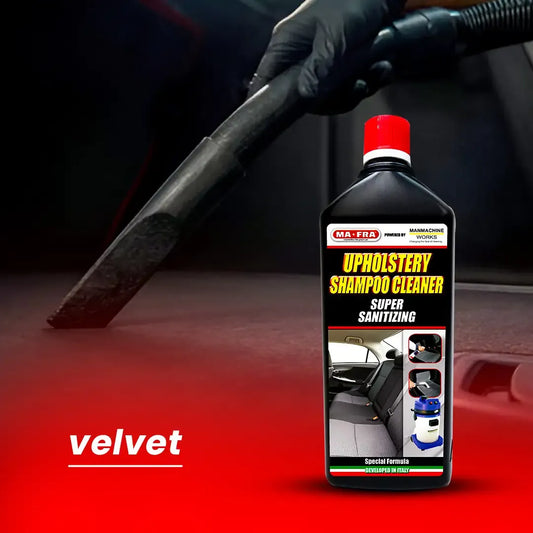
The Ultimate Guide to Professional Interior Textiles & Carpet Care
What are Professional Carpet Cleaners and How Do They Work?
Professional carpet cleaning agents use a combination of surfactants, solvents, and enzymes to manipulate surface tension. Unlike household cleaners that often trap dirt, automotive specific solutions use encapsulation technology or high foaming action to suspend particulates. This allows the dirt to be lifted away from the fiber strand during agitation or extraction. High quality formulas are designed to be low foaming for extractor machines to prevent pump damage while maintaining high alkalinity to neutralize acidity found in food spills and body oils.
How to Choose the Right Fabric Cleaner
Selecting the correct chemistry depends on your cleaning method and the stain type. For spot cleaning or manual scrubbing, choose a high foaming shampoo that lubricates the fibers to prevent fraying during agitation. For machine extraction, select a low foam extraction fluid that rinses clean to avoid attracting new dirt. If you are dealing with organic stains like milk or pet accidents, an enzyme based cleaner is necessary to bacteria that cause odors. Always verify if the product is safe for delicate surfaces like Alcantara or microsuede before application.
Step-by-Step Usage Guide
Follow these steps to safely clean automotive textiles without causing mold or fabric damage.
- Vacuum the area thoroughly to remove loose debris and dry soil before wetting the fabric.
- Spray your chosen cleaner onto the stain or section and allow it to dwell for 30 to 60 seconds.
- Agitate the surface gently using a soft drill brush or detailing brush to lift dirt from the depth of the fibers.
- Extract the suspended soil using a wet vacuum or hot water extractor until the water runs clear.
- Blot the area with a clean microfiber towel to remove excess moisture and accelerate the drying process.
Common Mistakes to Avoid
Avoid these frequent errors to ensure professional results and prevent damage.
- Oversaturating the foam or carpet which can soak the backing and lead to mold growth or bad odors.
- Using high alkaline cleaners on delicate fabrics like wool or Alcantara without neutralizing them.
- Failing to extract all the soap residue which causes the carpet to become sticky and attract dirt faster.
Frequently Asked Questions about Carpet & Upholstery Cleaning
Q: Can I use these cleaners with a steam cleaner?
A: Yes, many professional detailers use steam to heat the chemical agent which increases its cleaning power. However, do not put the chemical directly into the steam boiler unless the machine manufacturer explicitly allows it. Instead, spray the chemical on the carpet and use the steam to agitate and rinse.
Q: Will these products remove water spots from car seats?
A: Water spots on fabric are often mineral deposits or pushed dirt rings. Using an acidic rinse or a dedicated fabric cleaner with proper extraction will effectively remove these rings. The key is to clean the entire panel rather than just the spot to ensure uniform blending.
Q: How long does it take for the seats to dry after extraction?
A: Drying time depends on ambient humidity and how much water was used. With proper extraction and air movement from a fan or blower, seats typically dry in 2 to 4 hours. If the seats remain wet for longer than 24 hours, you risk mold development and must increase ventilation immediately.


 Sold out